
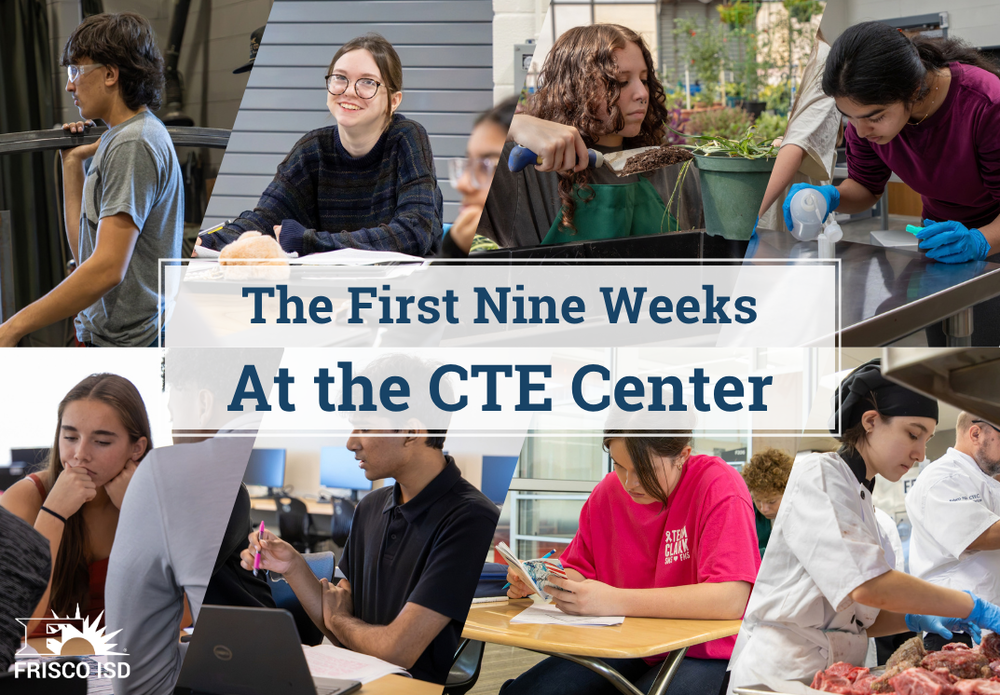
A visit to the CTE Center during the first nine weeks shows just how students are getting started on their futures, right now. Take a look inside some of those classrooms.
Part Two: Graphic Design, Law, and Animal and Plant Science
Part Three (coming Wednesday): Culinary Arts, Agricultural Mechanics and Veterinary Science

Graphic Design and Illustration
Class visited: Graphic Design and Illustration II | Teacher: Mitchel Reeder
Arts, A/V and Communications programs of study
Graphic design and illustration students are putting their skills to work right away, and making career moves in the process.
Mitchel Reeder is proud to list the many real-world projects and accomplishments of his students. Among them, the Frisco ISD Book Bus, wrapped in one of his students’ designs and stamped with her name and the CTE Center for the whole community to see.
Talk about a badge of honor.
“Students don't just leave with design skills,” Reeder said. “They leave with industry credentials, authentic work, professional experience and a portfolio that demonstrates what they can do.”
In the first nine weeks, graphic design students are learning and working on:
Developing foundational skills in Adobe Photoshop and Illustrator.
Preparing for and earning Adobe Certified Professional certifications in Photoshop and Illustrator.
Tackling increasingly complex design problems and client-based projects.
Taking their skills into professional environments through internships and work-based learning.
Heritage junior Abigail Forsyth’s first brush with graphic design was in eighth grade broadcast class, making logos and graphics. From there, the pathway was a natural choice.
She said the greatest thing she’s learned so far this year is that she’s “improved significantly in only a year.”
“Many of my projects this nine weeks have actually been competitions that I entered into last year, and as I've compared my designs, I've seen an immense amount of growth,” Abigail said. “It makes me even more thankful for all the teachers I've had in these classes and all the help and support they've given me.”
Mane Babayan, a senior at Centennial and graphic design practicum student, is interning with the Frisco RoughRiders’ marketing department. In the first nine weeks, she applied the skills she learned through years of graphic design courses to develop a logo for their street team, design Rally Towels for the playoffs, and redesign the logo for Riders Field.
“My graphic design courses showed me that a career can be both creative and practical, which sparked my interest in marketing, the field I plan to major in,” Mane said. “It's been an amazing experience, and to any who are still on the fence, take a chance and explore your interests.”
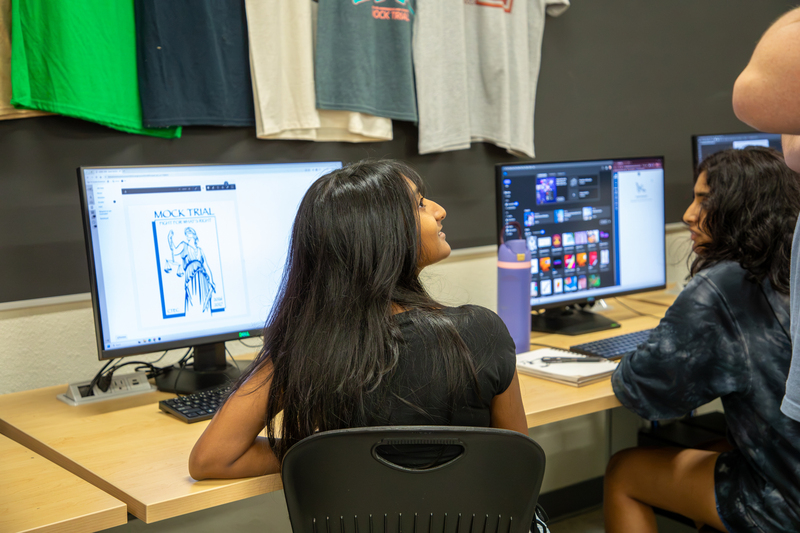
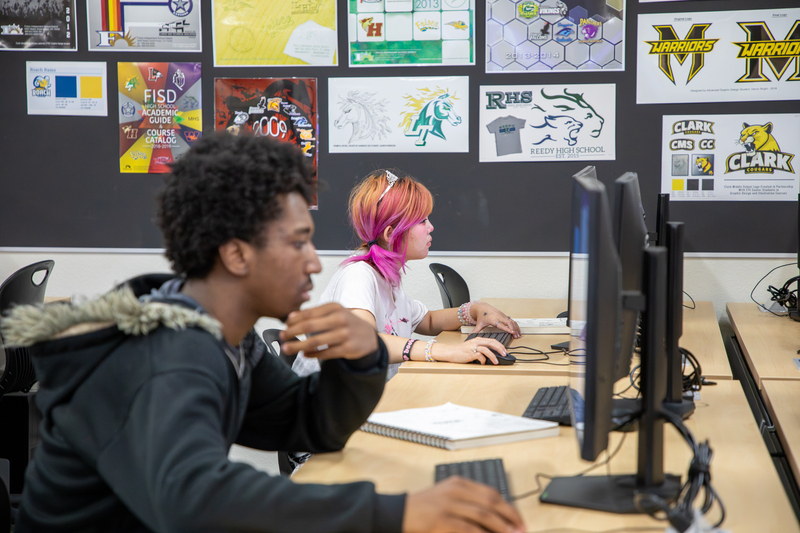
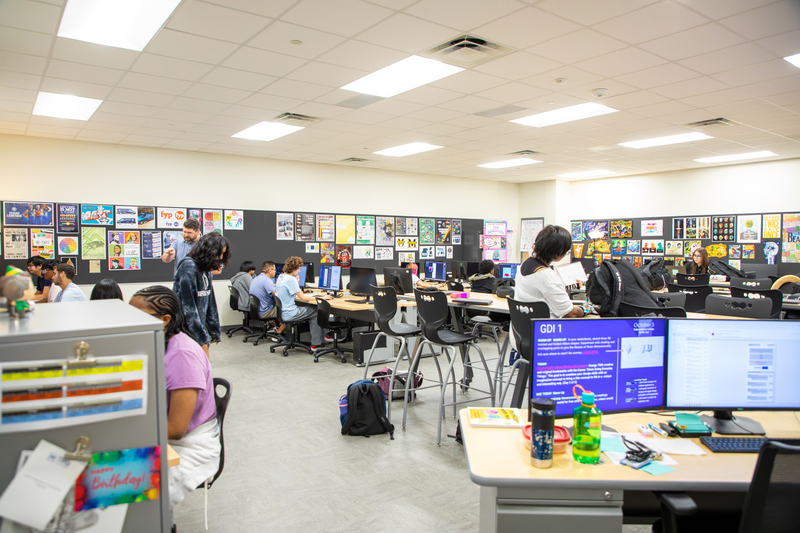
On a visit to Graphic Design and Illustration 2, students were working in Adobe Photoshop on submissions for the Frisco Public Library’s bookmark contest. These opportunities to build their portfolios with real-world projects distinguish the graphic design program.
“My hope is that when students leave CTEC, they don't just say, ‘I took a graphic design class.’ They can say, “I know what I can do, I have proof that I can do it, and I'm ready to see where it takes me.’” Mitchel Reeder, CTE Center teacher
Law/Government
Class visited: Survey of Government & Public Administration | Teacher: Cory Cummings
Law & Public Service programs of study
When it comes to the law, you can’t trust a courtroom drama to get it right. But sometimes, that TV show can inspire an entire career.
That’s the case for Madilyn Hart, Heritage senior and Practicum in Government student.
“Honestly, as silly as it sounds, I got into law and politics because of what I saw on TV,” she said. “Seeing just how much political institutions affect people's day-to-day life really sparked my interest in law and political science.”
In the first nine weeks, law and government students are learning and working on:
Understanding federal bureaucracy and local government, taking on the role of a city council member and creating a budget for the city to be presented to constituents (fellow students).
Comparing the principles of Classical Republicanism and Natural Rights philosophers such as Aristotle, Thomas Hobbes, and John Locke by participating in Socratic Seminars.
Analyzing the components of the Declaration of Independence with a colonial simulation to decide what course of action is best suited for you and your community based on the actions of Parliament and the king.
Understanding the basics of the U.S. Constitution and how the Supreme Court uses it to guide judicial decisions.
Interning at local law firms for their practicum.
Bridging political theory and real-world issues is such an important part of CTE Center government courses, said teacher Cory Cummings.
“The legal studies pathway prepares students for the higher-level thinking they’ll need not only for collegiate success, but also for career success, as they consider real issues facing society,” Cummings said.
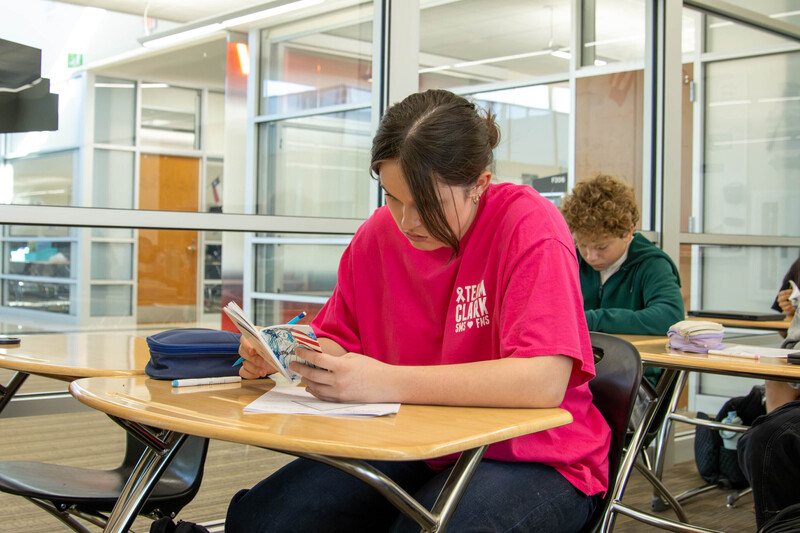
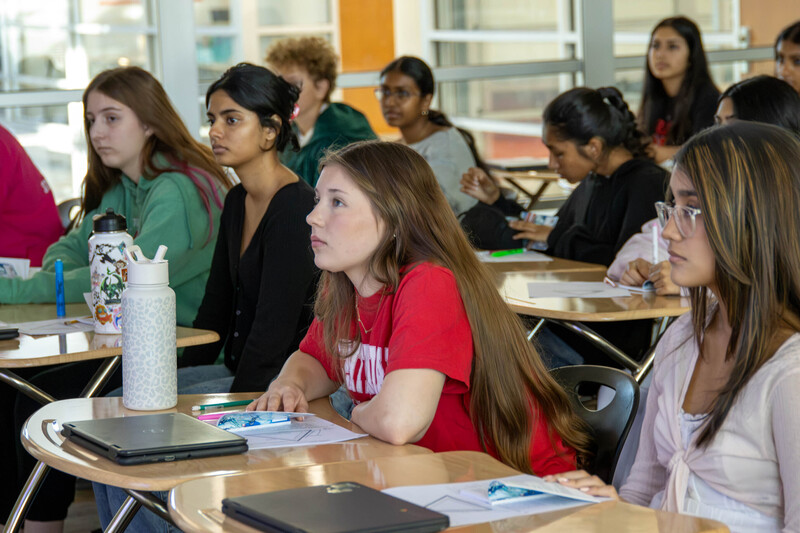
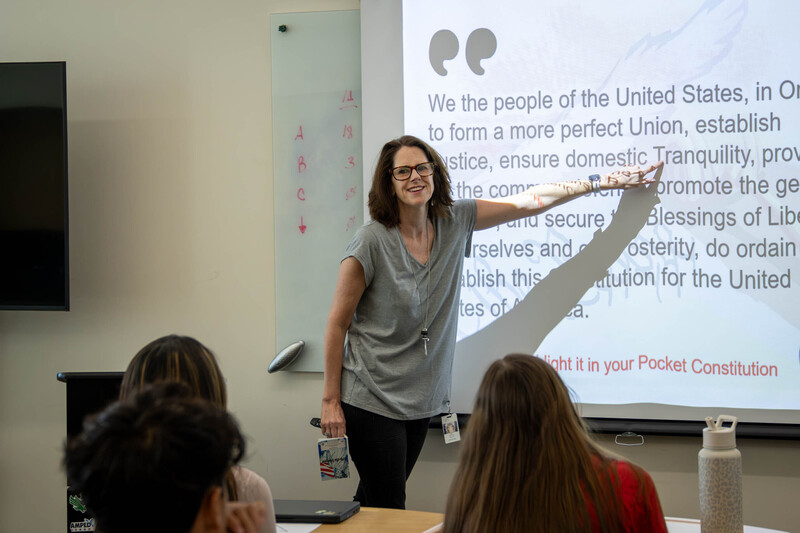
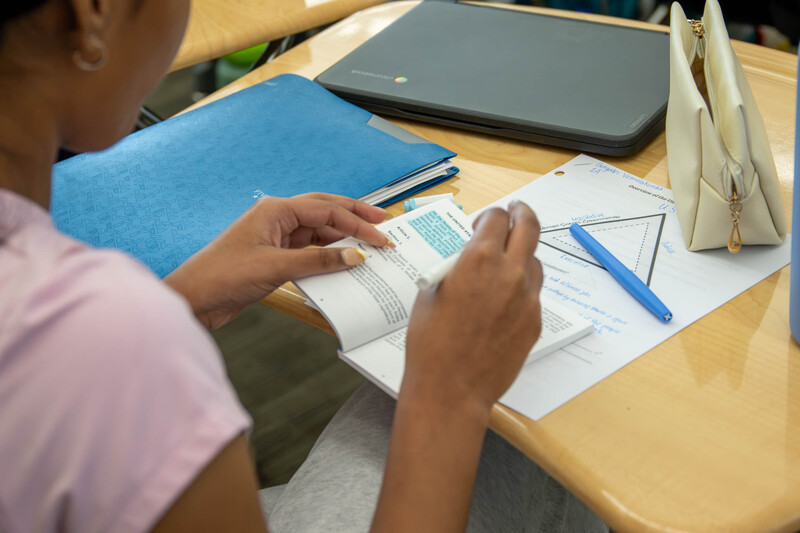
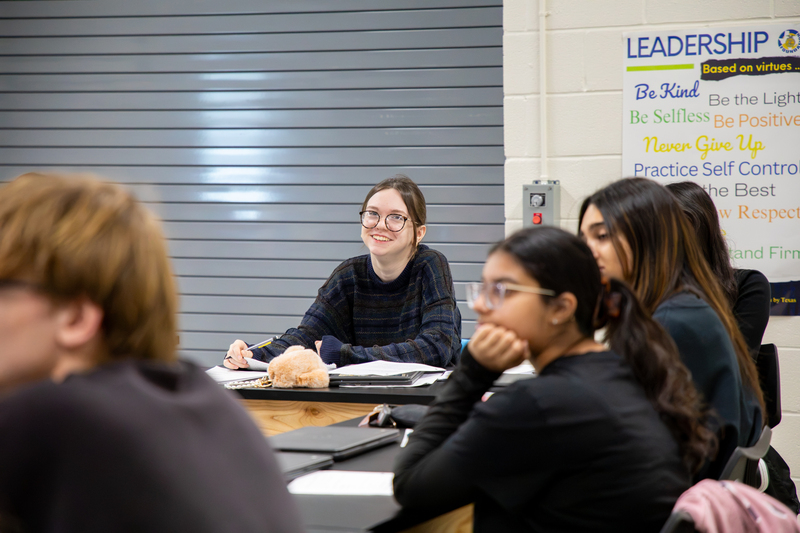
On a visit to Survey of Government & Public Administration in the first nine weeks, students were going word by word through their pocket Constitutions — a foundational document for potential lawyers, police officers and other related careers.
“The survey class made me realize legal advocacy was more than just courtroom rhetoric, but understanding how political institutions can be built and reformed so that the rule of law actually delivers justice. Every policy has a rationale, a history, and I wanted to uncover each layer.” Madilyn Hart, CTE Center student
In her internship, the highest level of the government pathway, Madilyn has learned how to draft wills, the difference between revocable and living trusts, but most importantly, she said, “how much studying law can actually help our world.”
“I get to study under real experts with years of experience older than my parents, and getting to have this opportunity as only a high schooler has truly shaped the way I think critically about the world around me,” she said. She plans a future in law, thanks to her CTE Center courses.
Fellow practicum student Jameson Elkins, an Independence senior, started down the law pathway after hearing about the connections and internships available for upper-level students.
Now, at his internship, he’s been able to immerse himself in what it feels like to work at a real law firm.
The work he’s doing includes using online platforms to draft and file estate planning documents, creating court binders for the lawyers, redacting documents for court, sitting in on client meetings and taking notes, and closing client files and sending them closing letters — as well as less exciting duties like stapling, filing, organizing and logging expenses.
“While these tasks can be less exciting than drafting documents, they help me to experience all the aspects of a career in a law firm, helping me to truly decide if the legal field is right for me,” he said.
And while his practicum has helped clarify his career plans, unlike Madilyn, he doesn’t plan to study law right away. Advice from one of the lawyers he works with inspired him to first get a degree in finance, then go to law school.
“This just goes to show how the advice and knowledge that you obtain through CTE Center courses from real professionals will help you with more than just what you learn in class,” he said. “They’ll help your future endeavors, too.”
Cummings trusts that government students will take that drive for knowledge and truth into the real world.
“My hope is that they don't assume that everything they hear is true,” she said, “and take the time to consider the source, the facts presented, and viewpoints beyond their own assumptions.”
Animal and Plant Science
Class visited: Animal Science | Teacher: Lauren Dye
Agriculture, Food & Natural Resources programs of study
Behind the CTE Center stands a glass building teeming with life — a testament to the long, hot hours of work students have put in to grow their futures.
The animal and plant science pathways at the CTE Center are preparing students for careers raising, nurturing and protecting life. And they take that responsibility seriously.
In the first nine weeks, animal and plant science students are learning and working on:
Discussing different careers in these industries.
Going over how to set up a lab, including a slime lab where students had to find out which activator method worked best, as a foundation for other labs throughout the year.
Identifying the importance of plants and what they can provide other than aesthetics, like medicine and food.
Differentiating the parts of a plant and their functions.
Preparing for the fall plant sale, which was last weekend, including learning how to provide good customer service.
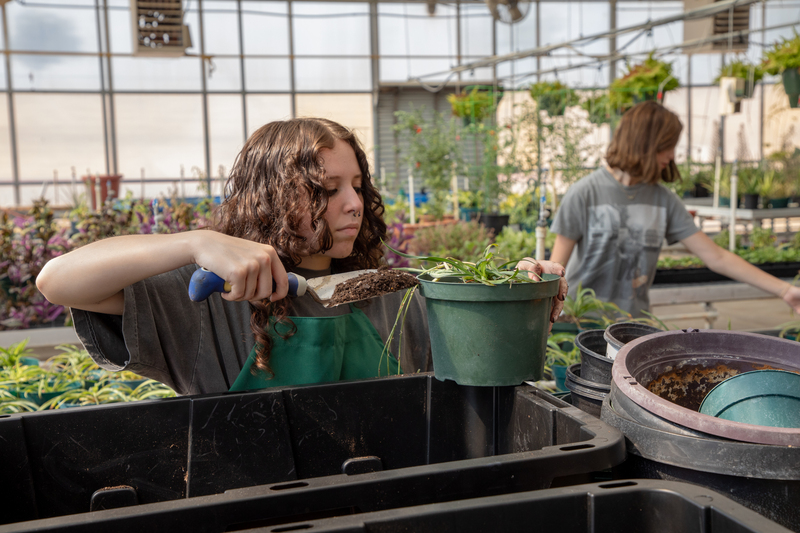
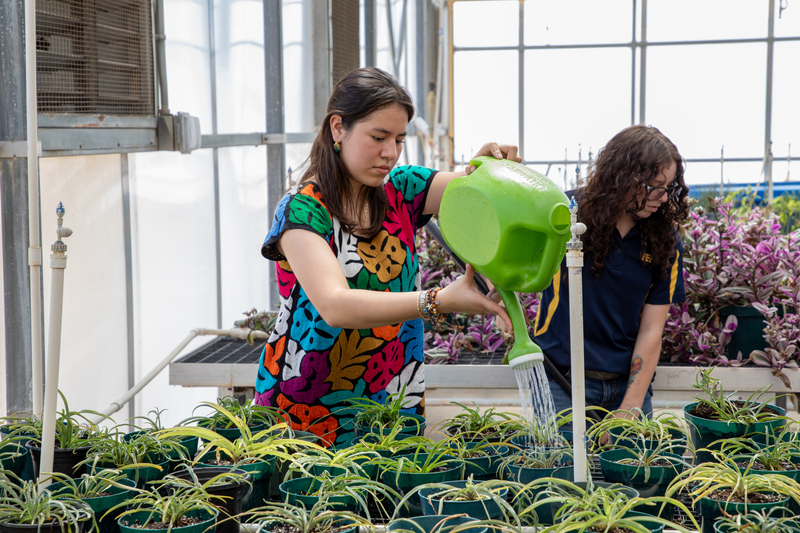
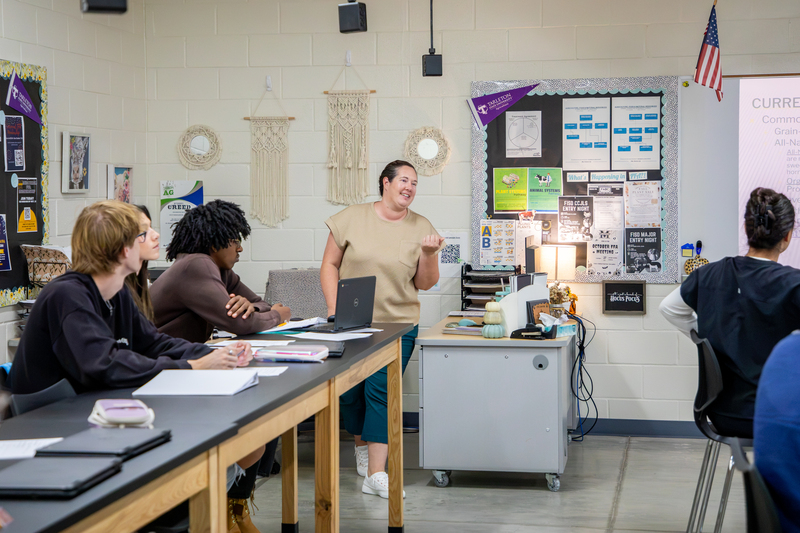
On a visit to the greenhouse in the first nine weeks, students were planting, watering and fertilizing in a sea of green, getting plants ready to sell to the public. In the animal science class, students discussed meat consumption trends over the past decade.
Kat Breaud, a Lone Star senior taking four classes in the pathway this year, has come a long way since taking Survey of Agriculture, Food and Natural Resources as a freshman looking to fill her schedule.
“I ended up loving it, so I’ve been taking agriculture classes ever since. I fell in love with the idea of plants and animals and their functions.” Kat Breaud, CTE Center student
In the first nine weeks, Kat worked in the greenhouse during landscape and horticulture classes and learned safety and cleaning guidelines in animal science.
“Agriculture classes have given me hands-on opportunities to experience what I want to do with my future,” Kat said, “especially the classes that deal with plants.”
Fellow landscape and animal science student Camryn Garcia, a Heritage senior and accomplished FFA livestock competitor, said agriculture classes have let her explore her interests in greater depth.
“I've always been interested in livestock and about the agriculture industry as a whole, and how it works,” she said. “I can now say for certain that my interest has never dulled and has only grown.”
That’s the idea, said teacher Lauren Dye.
“My goal is for students to leave my classes with a better understanding of the opportunities available to them and the confidence to pursue whatever path they choose,” she said. “Most importantly, I hope they develop an appreciation and passion for what they have learned, while knowing that they were valued, supported and encouraged to be successful.”
Animal and plant science may not be as well known as other CTE Center courses, Camryn said, but they’re absolutely worth trying out.
“I would have loved to take these classes and join FFA sooner,” she said, “but I'm very grateful and happy with the opportunities I've been given. The chance to show an animal, learn what makes a high-quality animal, learn how to be a better showman are all things I could go on and on about.”
- Rachel McReynolds