
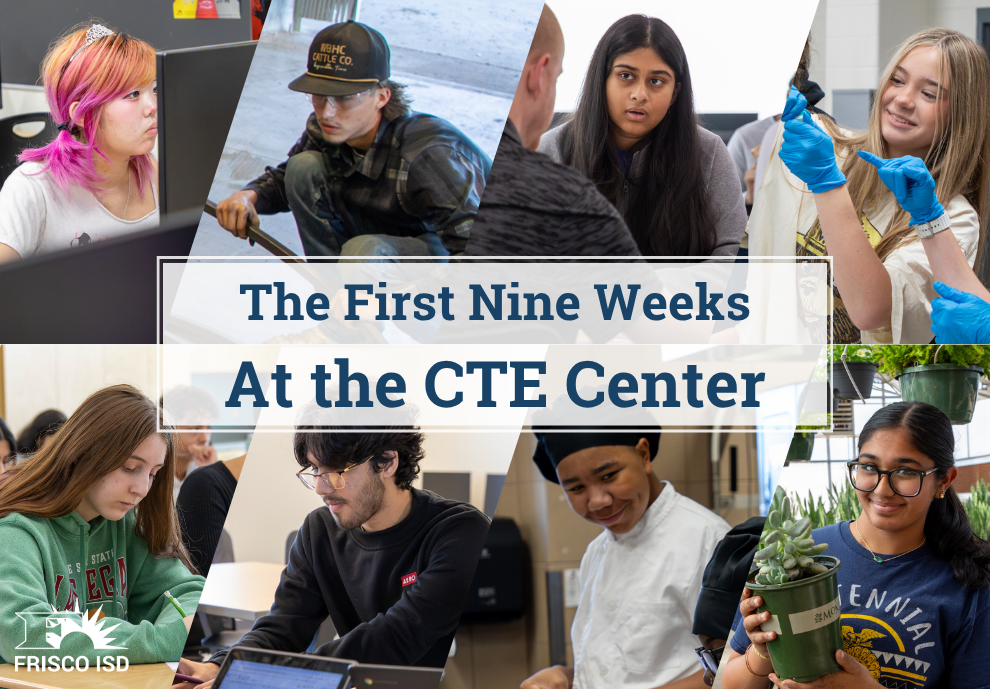
A visit to the CTE Center during the first nine weeks shows just how students are getting started on their futures, right now. Take a look inside some of those classrooms.
Part Three: Culinary Arts, Agricultural Mechanics and Veterinary Science
Culinary Arts
Class visited: Culinary Arts 2 | Teacher: Sara Hosford
Hospitality & Tourism programs of study
Frisco ISD students don’t even have to leave the CTE Center to experience what it’s like to run their own restaurant.
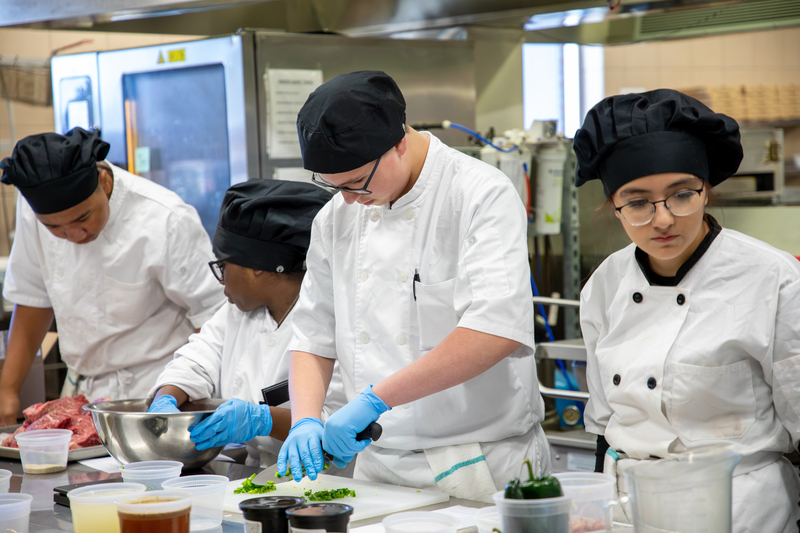
Thanks to a professional-grade kitchen, experienced chef-instructors and a curriculum that dives in head-first, the Culinary Arts 2 class is whipping up a full-service experience at the in-house restaurant, Saveur.
In the first nine weeks, advanced culinary arts students are learning and working on:
Making pasta and ravioli
Braising, smoking meats and roasting tomatoes
Incorporating fresh herbs into dishes to help them reach their maximum flavor profile
“The list of things we've learned thus far is endless,” chef-instructor Sara Hosford said.
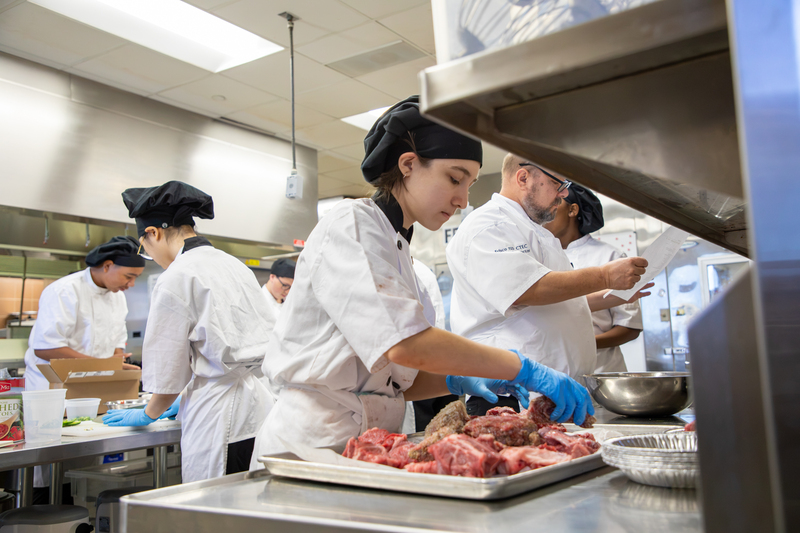
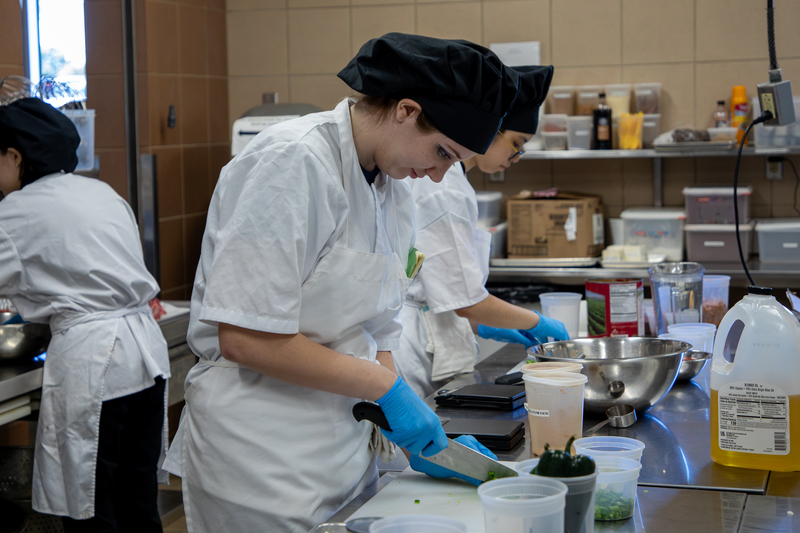
On a visit to the large kitchen that serves as their CTEC classroom, students were finishing up pesto goat cheese tarts and apple tarts, popping them in one of the industrial ovens to cook. Other students were seasoning meat and chopping vegetables, referring to recipes they had handwritten in notebooks.
All of this is in preparation for the opening of Saveur, where the public can enjoy a sit-down or takeout meal. They are taking reservations for fall dates including Oct. 28-29 and Nov. 4-5. (View the menu.)
Saveur is entirely student-run: They cook the food, serve it, take orders, collect payment and bus the tables. It’s a high-pressure situation, but no different than they’d experience in another restaurant.
Seniors River Reid and Daniel Ingoldby, who are taking Culinary Arts 2, both jumped into the culinary pathway because of a developing passion for cooking. They’ve noticed how highly regarded the CTEC culinary arts program is in the community and appreciate the doors that have opened because of it.
“I get quite a few volunteer hours from this course, but there's also people who respect this course enough to consider us for bigger things such as scholarships or even potential employment in the future,” River said.
Daniel agrees, saying that his experience in the culinary program helped him score his first job.
While River is planning a future in culinary arts and Daniel isn’t, the lessons they’re learning now will serve them for a lifetime.
Daniel said in the first nine weeks he learned better time management, food theory and new cooking techniques, like sautéing and emulsifying.
Hosford hopes her students take these skills into adulthood. After all, everyone needs to eat.
“My ultimate goal is for students to be able to cook for themselves one day. I love when they cook at home for their family. I hope the ones that do go off to culinary school are successful and regarded as prepared.” Chef-instructor Sara Hosford
Agricultural Mechanics
Class visited: Agricultural Mechanics and Metal Technologies | Teacher: Kris Schertz
Agriculture, Food & Natural Resources programs of study
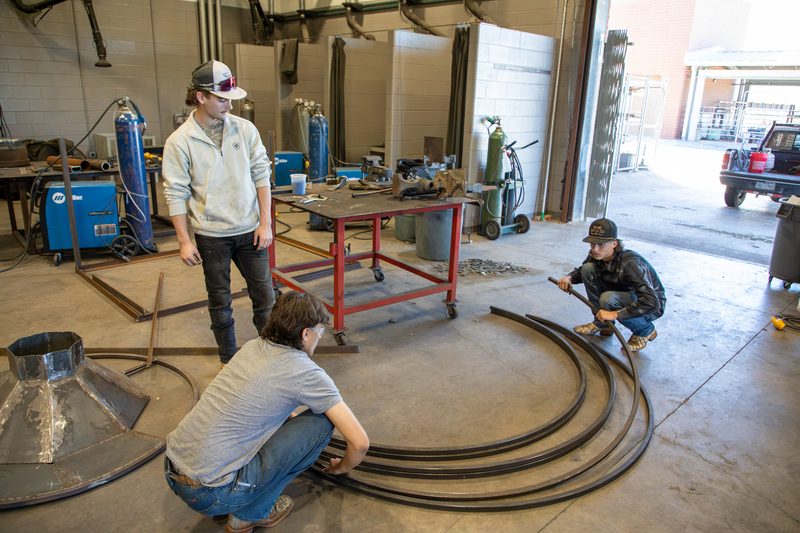
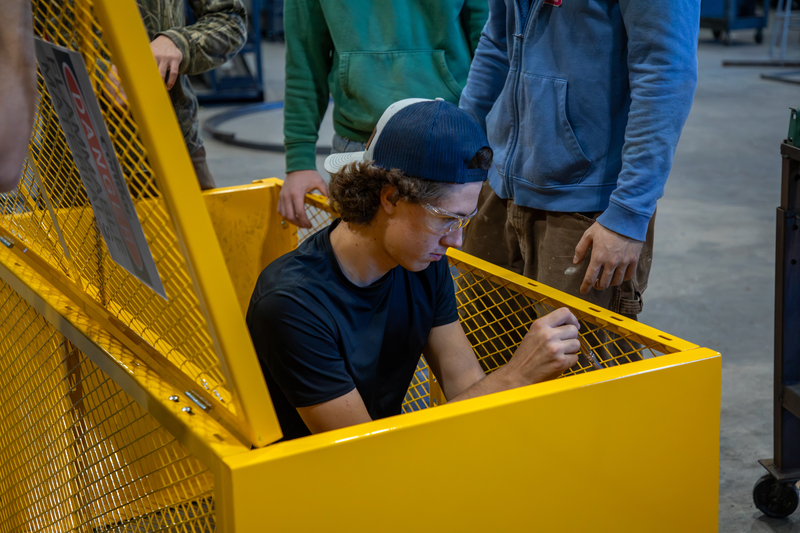
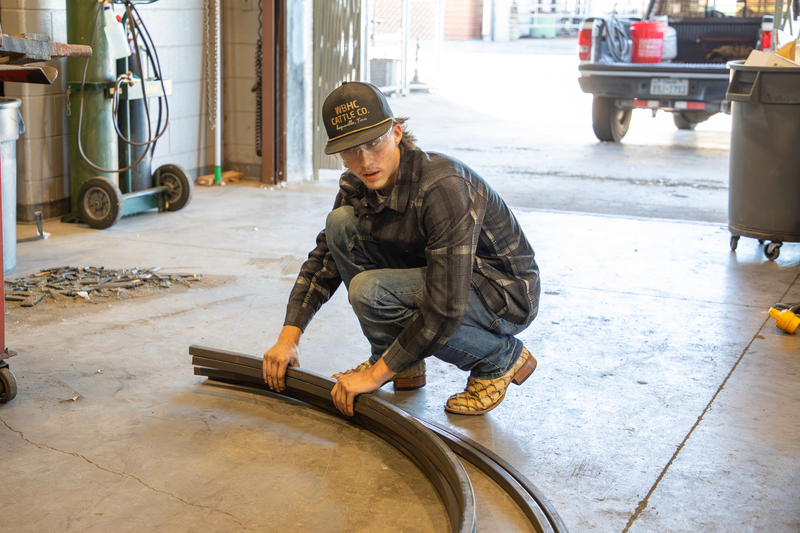
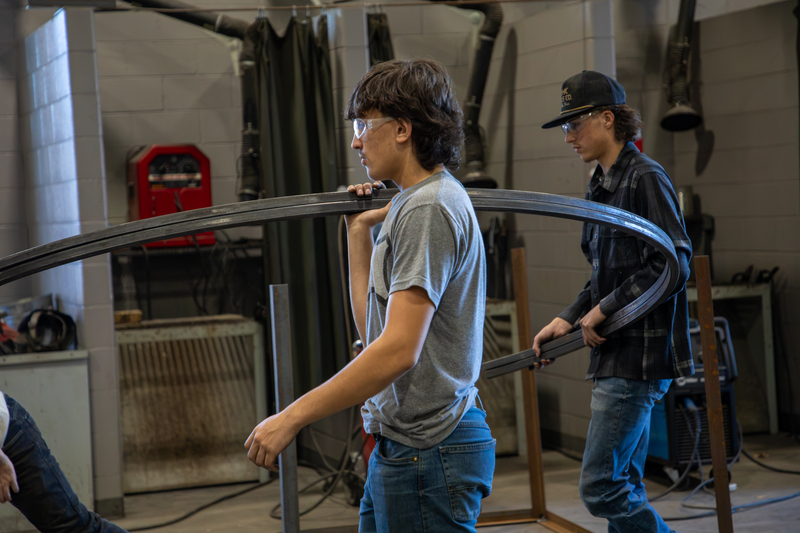
While culinary students are turning up the heat in the kitchen, across campus, students in agricultural mechanics are firing up their torches.
Agricultural mechanics applies engineering technology to agricultural problems related to power and machinery, electrification and structures, among other issues.
In the first nine weeks, agricultural mechanics students are learning and working on:
Reading and drawing blueprints
Welding applications, including shielded metal arc welding and gas metal arc welding
CNC design and operations
Safe operation and application of metal and woodworking hand tools
Students start the nine weeks with safety instruction, then plan and organize wood or metal projects for clients or themselves. Projects take about nine to 12 weeks, says CTE Center teacher Kris Schertz.
“This year, we have customers wanting fire pits, smokers, trailers, hay feeders, truck bumpers and grills, and smaller projects,” Schertz said. “I try to give every student the opportunity to hone their skills along with challenging them to apply critical thinking skills.”
The hands-on, practical nature of ag mechanics draws students from all backgrounds and skillsets, like Pierson Quinn, a Memorial junior and ag mechanics student.
“I have always loved projects, whether it was fixing something up or creating something brand new,” he said. “When I learned that I could take a class that would teach me to weld, I immediately seized the opportunity.”
He worked in the first nine weeks on a live-edge epoxy table that he’ll take to compete at a county show.
“Probably one of the most important skills I learned is self-reliance. If the project is going to get done and be something I will be proud of showing, it is up to me.” Pierson Quinn, CTE Center student
Agricultural mechanics was Independence senior Ava Baldwin’s first course in the agriculture pathway — getting the ball rolling on her future career.
Ava is now enrolled in Practicum in Agricultural Structures & Equipment, where she’s gone through interviews, discussed terms with potential employers and gained hands-on working experience.
One of the most important lessons she’s learned is that agricultural careers aren’t just limited to farmers and ranchers, but also include welders, engineers, scientists and even government officials.
When asked if she recommends agriculture courses, Ava gives an absolute yes.
“Agriculture and FFA have made my high school experience the best it could be and given me a great community,” said Ava, who’s found success in FFA in both cattle exhibition and ag structures. “All high school students should take an agriculture course to better their understanding of the world around them.”
After graduation, Ava is planning to study animal science with a focus in feedlot production, and possibly agricultural sales, at West Texas A&M University.
Pierson, meanwhile, was inspired by his agriculture classes to pursue a career in HVAC and own his own business.
“Whether it's showing my pigs or competing in FFA, my experiences in agriculture have changed me for the better,” Pierson said. “They have given me a chance to discover something I never thought possible.”
Veterinary Science
Class visited: Veterinary Science 1 | Teacher: Danielle Robinson
Agriculture, Food & Natural Resources programs of study
Students enter the CTE Center’s veterinary science program with a love of animals, and leave with a complete grasp on what caring for them means.
In the process, they can earn their Certified Veterinary Assistant (CVA) Level 1 qualification, an industry certification that makes them employable and can set them apart when applying to vet school.
Every practicum student took their CVA and passed this spring, teacher Danielle Robinson is proud to share.
In the first nine weeks, veterinary science students are learning and working on:
Health and safety standards
Ethics and animal rights and welfare
The human-animal bond and communication
Preparing to earn their CVA in April (practicum)
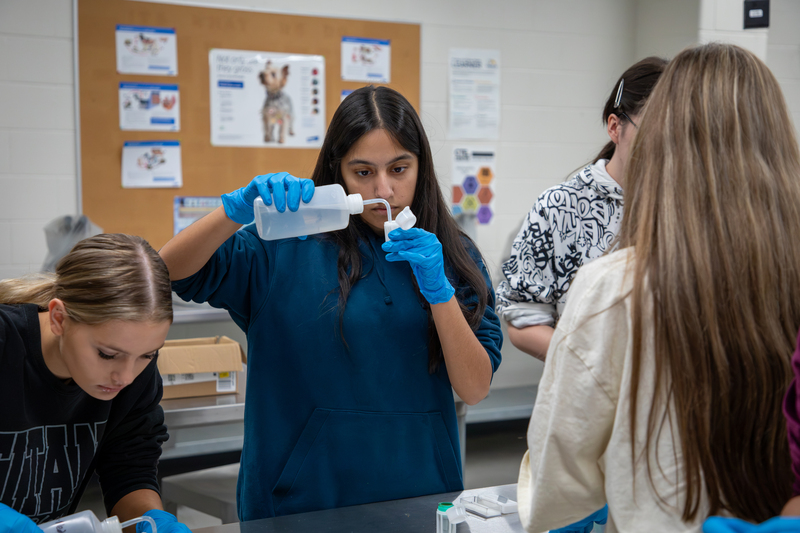
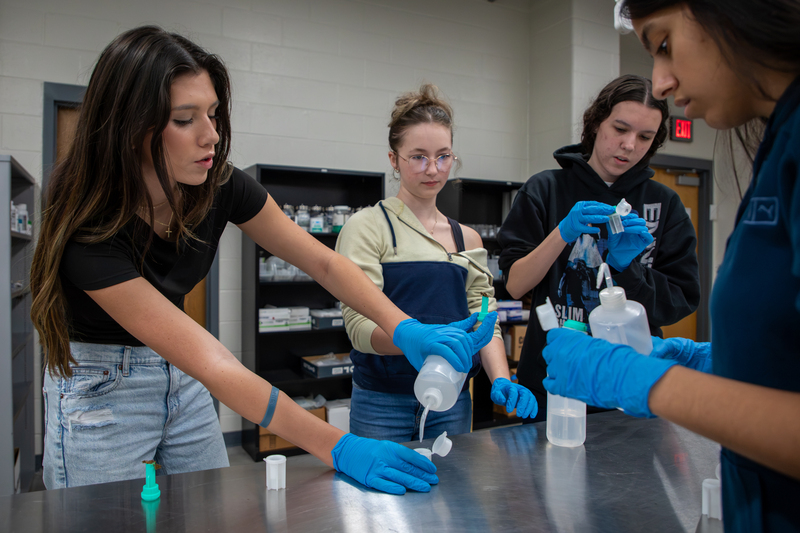
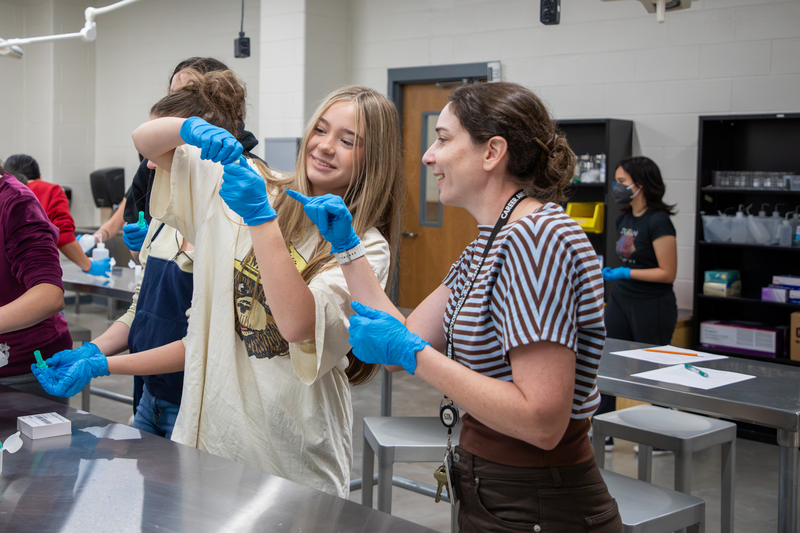
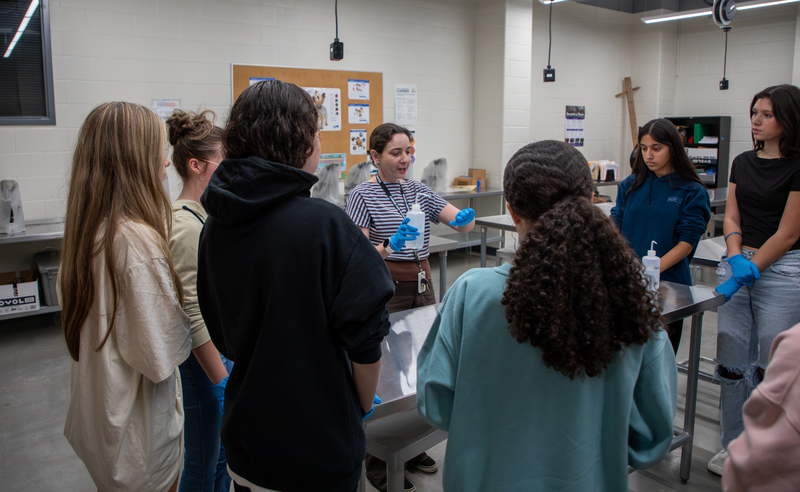
On a visit to a Veterinary Science 1 class in the first nine weeks, students had an impromptu opportunity to look at livestock fecal matter and check for parasite eggs.
Practicum students, meanwhile, are working at local veterinary clinics. One of those students is Medha Pottumurthy, an Emerson senior who has been interested in the veterinary field since childhood. She grew up around horses, building a “deep connection to animals and a desire to advocate for them.”
“As I got older, that turned into scientific curiosity about their biology and health,” she said, “so taking a veterinary science class felt like the perfect way to turn that passion into a meaningful career.”
While her understanding of veterinary medicine was based on videos, thanks to her practicum course, she’s learning how a real clinic works.
“I’ve observed a wide variety of cases — ranging from wounds in stray dogs to pets being treated for foreign body ingestion,” she said. “Each case has taught me how veterinarians evaluate patients when animals can't communicate how they feel.”
At the clinic in the first nine weeks, Medha learned patient and technician safety while shadowing clinic staff, pulling blood samples and running lab diagnostics.
Fellow practicum student Everett Burky, a Lone Star senior, has also jumped right in, learning how to set up for surgeries, give animals injections and perform diagnostic tests.
Both students are planning careers in the field and feel their time in the pathway has given them a head start.
“Getting hands-on experience has made me more confident about studying veterinary science in college and eventually working with animals as a career.” Everett Burky, CTE Center student
For her part, Medha has seen how well-respected the CTE Center pathway truly is.
“The program prepares us for what we’ll encounter on the job,” she said. “Local veterinary clinics know the quality of training we receive, which helps us when we’re looking for jobs or opportunities to shadow professionals in the community.”
- Rachel McReynolds