
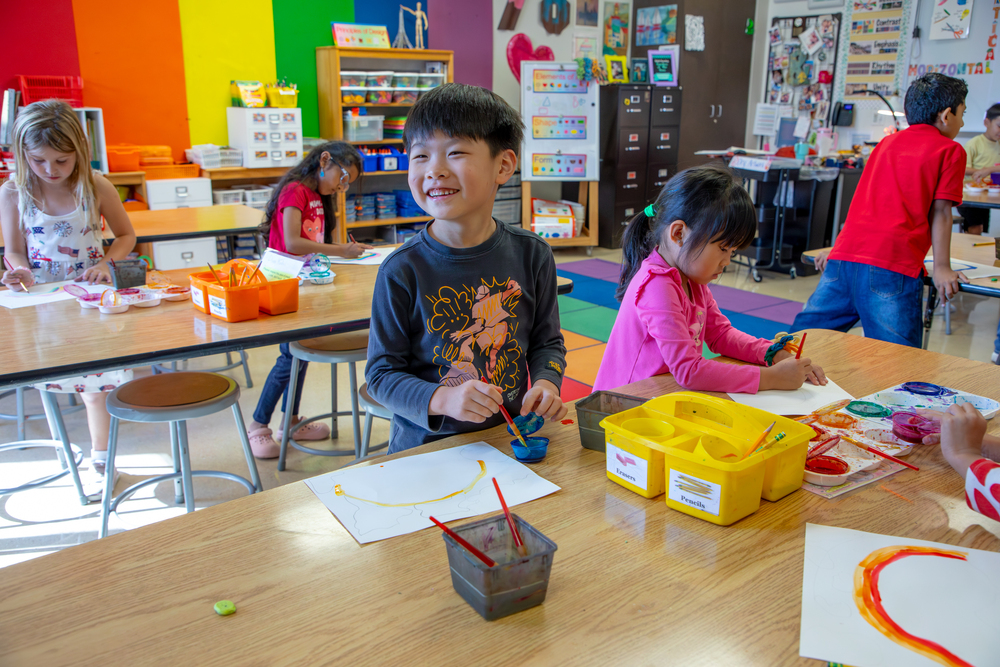
Frisco ISD is nurturing a love of fine arts that lasts a lifetime — and it all starts with the District’s youngest students.
In FISD, fine arts education begins early, with weekly visual art and music classes that inspire creativity in each of the District’s 44 elementary schools. These classes also prepare students for middle school and beyond, where they choose from an array of fine arts courses, earn awards and find their passion along the way.
That deep connection between an elementary fine arts foundation and secondary success is important, says Pete Hazzard, managing director of fine arts. High school talent and acclaim aren’t magic; they’re the result of intentional, inspirational teaching and curriculum at every age.
“At the elementary level, these are students that come to us without any really kind of substantial background in fine arts. And you have these great teachers that work to cultivate that day in and day out,” Hazzard said. “It's the regular approach in the fine arts classrooms at the elementary level that helps to really solidify what those foundational concepts are. Our secondary campuses and our exceptional secondary teachers take that foundation and continue to build on that.”
Success may not come at the wave of a wand, but in elementary fine arts classrooms, magic is still being made.
Music class: Learning through play
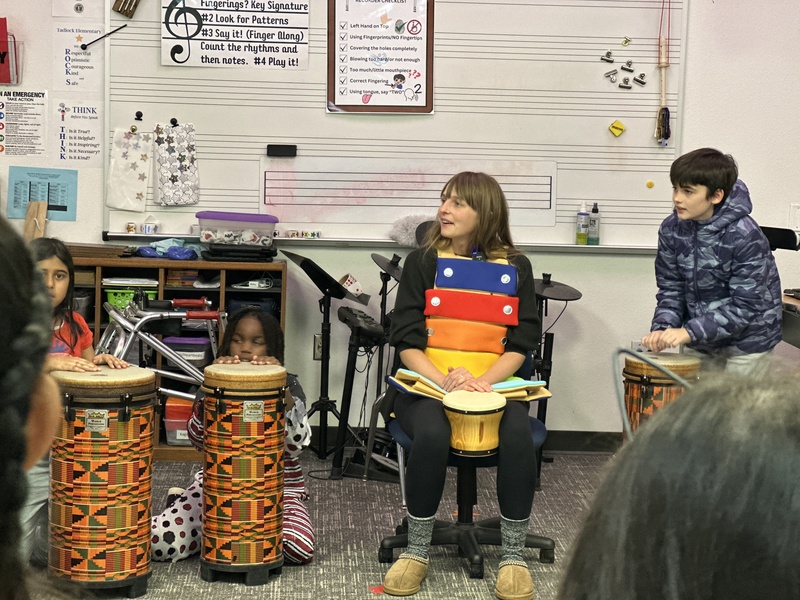
Inside Nicole Zagorski’s music room at Tadlock Elementary School, underneath papery purple-tinted lights, rows of pink and green ukuleles hang on one wall, with percussion instruments stacked underneath. Music principles are posted on a board under each grade level, and pictures of music notes and instruments dance across the walls.
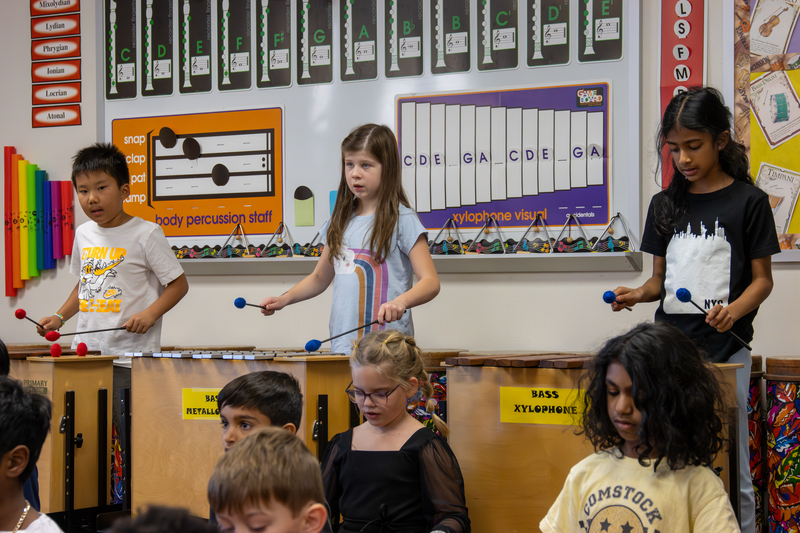
A drum circle greeted fifth graders on one recent Friday. Dressed as a xylophone, Zagorski asked each to take their own drum, keep a specific beat and tell her — on the beat, carefully measuring each syllable — what their favorite Halloween candy was.
“We do a lot of singing, dancing and a lot of playing instruments. I love teaching music through play,” Zagorski said. “The kids don't even know that they're learning, but they are and they are loving it and having so much fun. And if I buy into it, they buy into it.”
Hazzard said elementary fine arts classes are like “controlled chaos.”
“And part of that is both the breadth and the depth of what we provide our students in Frisco ISD,” Hazzard said. “When you go into an elementary music classroom, you don't see students sitting there in nice, neat rows. They're constantly moving, they're playing on the myriad instruments that are provided to those students, to be able to create music together.”
All that movement and play are part of the teaching style Frisco ISD has embraced — meeting state standards or TEKS in an environment that inspires and engages all students.
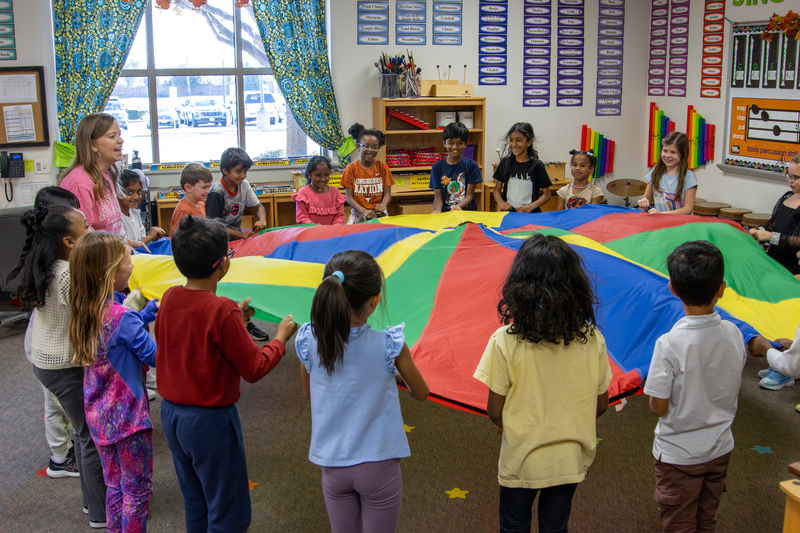
For Comstock music teacher Alicia Arruda, nothing tops watching students light up as they learn and try new things.
“I love that they cheer each other on and we get to do that so much in music class,” she said. “I love that every single child comes through the music classroom. I have the chance to affect the culture of not just my classroom, but really the entire school.”
Like Zagorski at Tadlock, Arruda brings the same energy into her music room.
“We use things that are very innate and natural to the child, like playing, singing, dancing,” she said. “We don't just learn about music. We do music. So the kids are active 100% of the time. We just make it very relatable to the child, which makes it very motivating. And if they're motivated to be in the music classroom, they're going to be motivated to learn music and to be lifelong musicians and learners of music”
And if you visit a music class in Frisco ISD, there are signs that it's working.
“My favorite thing about music class is how Ms. Zagorski always makes it interactive and fun, and she teaches us in fun ways, and not just boring old ways,” Tadlock fifth grader Adesynah said. “She gives activities to help us learn stuff, and we have fun.”
Adesynah takes piano outside school and finds music class has improved her playing.
“We learned the notes and symbols of the piano in class. It helps me advance quicker,” she said. “I knew about 16th notes in music class before I knew about 16th notes in piano.”
Art class: Coloring outside the lines
In fine arts, every student has a place. And in a visual art class, that place is pretty colorful.
Elementary art starts with the seven elements of art: line, shape, color, value, texture, space and form. Kindergartners learn the basics of making lines into shapes, then add color. By fifth grade, students discuss the principles of design, draw from the world around them for artistic inspiration, and understand art history and culture by analyzing style and historical periods.
And, of course, they get to work with watercolors, paint, clay and other media to bring their imaginations to life.
“I think it's amazing that these kids starting in kindergarten get to express themselves with their artwork,” Nichols art teacher Jennifer Schell said. “One of the things that I love about elementary art is that when my kiddos come to art, it's not like a spelling test or math assignment or something that has a specific right answer. They have all kinds of right answers when they come into the art room. There's a lot of freedom of expression here.”
In classrooms like Schell’s all over FISD, students are making a beautiful mess and preparing for secondary art in the process.
“They get the basics here, like how do you look at something and draw it? How do you break something down by shape to be able to put those ideas down on paper?” Schell said. “It's just a really great foundation, I would say. And then it prepares them to go bigger, stretch out their ideas just a little bit more and be more in depth when they get to middle school.”
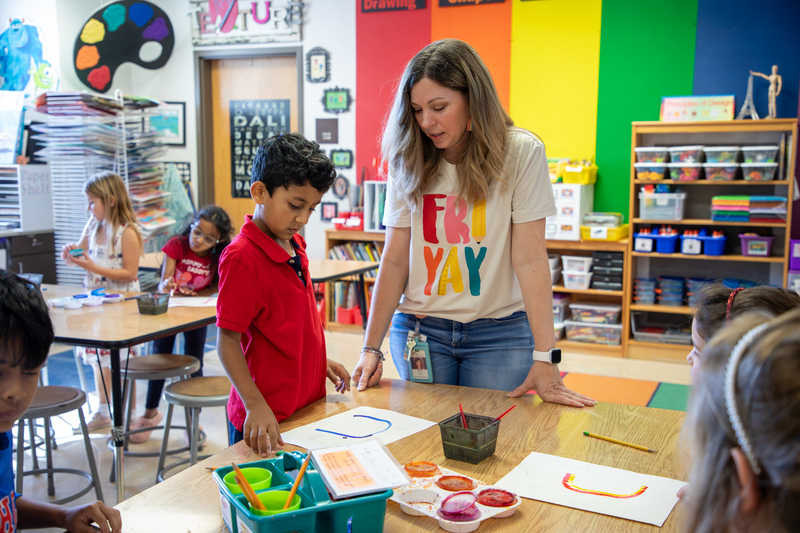
Her classroom was a riot of color and, yes, controlled chaos for a recent first grade class. But first, students went over the class rules.
“In the art room, we always do three things,” Schell said, and little hands raised. Those rules, students explained, are “Listen carefully, follow directions and do my best!”
They then reviewed organic shapes — “They don’t follow the rules!” one boy said. “They’re blobby and wobbly,” another said. What about geometric shapes? “They have names!” “They follow the rules!” students answered as they were called on.
They began working on their pieces with an instruction to use pencil: “We draw light till we get it right!” Schell said.
In the end, students had become artists and scientists, mixing oil pastels and figuring out patterns within the organic shapes they’d drawn around a multicolor rainbow.
First grader Maverick was excited to check in with Ms. Schell every few moments, showing off his work so far. “Art class is one of my favorite classes!” he said.
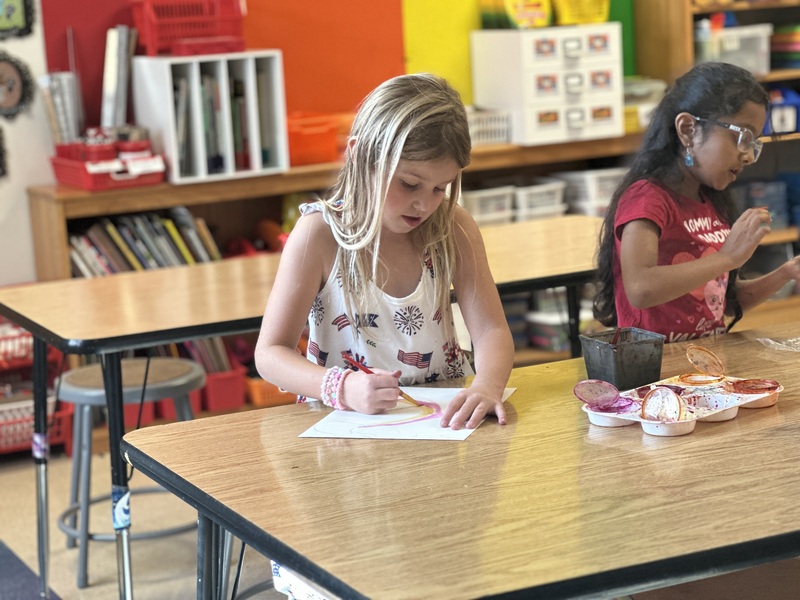
Addie, another first grader, said her favorite part of class is drawing pictures, especially rainbows, and cutting and gluing.
“It's my favorite specials, and I think it's one of the most important things you would like to have,” she said.
Elementary art classes also incorporate other subjects, such as building Alamo sculptures, studying artists from certain historical periods for social studies and painting jazz instruments being studied in music.
Schell said she and the Nichols teachers try to get together when they can and make those connections, reiterating lessons across different subjects.
Outside their elementary schools, Schell and other art teachers also collaborate across their feeder patterns in annual vertical art shows. Schell said her young artists get “really jazzed” to see older artists’ work at the schools they’ll someday attend.
“The great thing about this is our community, our parents and our students can come at the elementary level and not just see their artwork on display, but they can also see the progressive nature of what that's going to look like through high school,” Hazzard said. “It's a great opportunity to celebrate the totality of what that visual art experience and Frisco ISD is all about.”
A team activity
An emphasis on community learning sets elementary fine arts apart. Students learn as individuals in most of their classes, but in fine arts, they team up to make something incredible.
“This is an opportunity where students get to come together and to create, and they're learning to be emotionally expressive through community,” Hazzard said. “This is such an important part of not just learning in an academic environment, but being great citizens in the world.”
Teachers are especially grateful for that emphasis on fellowship — both for the teacher village they create, and for what it means to students, as well.
“We just have the most amazing community,” said Arruda. “I know it only takes one person to make a difference, and I love being able to be one of those people who makes a difference.”
How can the Frisco ISD community support elementary fine arts? Hazzard said it’s simple.
“Attend performances and showcases. Know and talk about the great things that are taking place in those classrooms,” he said. “We have the best teachers on planet Earth working with the greatest students anywhere, and being able to celebrate and tell that story, and attending events to see the fruits of their labor is the number one way that you can support them.”
- Rachel McReynolds